In structural steel design, the two primary contenders for horizontal framing are open web steel joists and hot-rolled solid web beams (often called I-beams or Wide-Flange beams). While both have their place in construction, the choice between them often dictates the financial and logistical success of a project. At COMSA Steel, we believe that a side-by-side cost-benefit analysis reveals why joists are the preferred choice for the majority of commercial and industrial applications.
The most immediate difference is mass. A solid web beam is a single, continuous piece of steel. While incredibly strong, it carries significant “dead weight” in its center (the web), which does relatively little to resist bending compared to the top and bottom flanges.
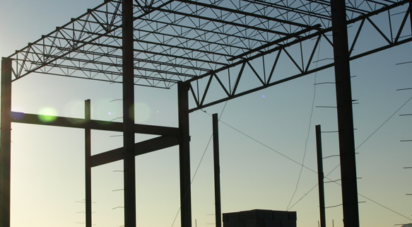
In contrast, a COMSA Steel joist removes that unnecessary mass, leaving only a lightweight lattice. For the same span and load, a joist system can be 30% to 50% lighter than a solid beam system. In an industry where steel is priced by the ton, this weight reduction translates directly into lower material costs.
The weight savings of steel joists don’t stop at the roofline. A lighter roof and floor system reduces the cumulative load on the entire vertical structure.
One of the hidden costs of solid web beams is “building volume.” Because a solid beam is a barrier, HVAC ducts, fire sprinklers, and electrical runs must be installed underneath it. This adds to the total height of each floor.
With the open web design of COMSA Steel joists, utilities are threaded through the structural members. This allows for a thinner “floor-to-floor” height. Over a multi-story building, saving just 10 inches per floor can eliminate several feet of total building height, reducing the cost of exterior glass, masonry, and even the energy required to heat and cool the extra volume.
Time is money on a job site. Solid beams often require heavy-duty cranes and more intensive field bolting or welding. Steel joists are prefabricated with “seats” that allow them to be quickly dropped onto their supports and secured. Furthermore, because they are lighter, smaller (and less expensive) cranes can often be used for the duration of the steel package installation.
At COMSA Steel, we value transparency. Solid web beams are still superior in specific scenarios:
For standard commercial roofs, mezzanine floors, and industrial clear-spans, the open web steel joist is the undisputed champion of value engineering. It optimizes material, simplifies trade coordination, and speeds up the construction schedule—ensuring your project stays on budget without compromising structural integrity.