In the landscape of modern industrial architecture—from the sprawling “mega-warehouses” of the American Midwest to the high-tech manufacturing plants of Central Mexico—the Open Web Steel Joist (OWSJ) is the unsung hero. To the untrained eye, it is a simple lattice of steel. To an engineer, it is a masterclass in structural optimization: a component designed to provide maximum strength with minimum material weight.
Understanding the anatomy of a joist is fundamental for anyone involved in detailing, fabrication, or field erection. In the 2026 market, where material costs are volatile and “Green Steel” initiatives prioritize efficiency, the OWSJ remains the most cost-effective way to span long distances.
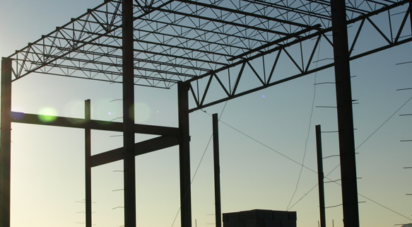
A standard joist is comprised of five primary parts, each serving a specific structural purpose.
1. The Top Chord The top chord acts as the primary “compression” member. When a load (like a roof or a concrete floor) is applied, the top chord wants to shorten or buckle. In most OWSJ designs, the top chord consists of two steel angles placed back-to-back. This geometry provides a flat surface for the attachment of steel decking.
2. The Bottom Chord In direct contrast to the top, the bottom chord is a “tension” member. Under a standard downward load, the bottom chord is being pulled apart. Because steel is incredibly strong in tension, the bottom chord is often slightly lighter than the top chord, though it typically uses a similar back-to-back angle configuration.
3. The Web Members This is the “zigzag” pattern that gives the joist its name. The web members transfer the shear forces between the top and bottom chords. Some web members are in compression (struts), while others are in tension (ties).
4. The Joist Seats The “seat” is the structural element at each end of the joist that rests on the supporting girder or masonry wall. The depth of the seat (standardized at 2.5 inches for K-series joists) is vital for ensuring the joist maintains its correct elevation across the entire floor or roof plan.
5. Bridging While technically an accessory, bridging is an anatomical necessity. Because joists are “narrow” members, they are susceptible to twisting (lateral-torsional buckling) during construction. Bridging—either horizontal or diagonal—connects a row of joists together, creating a rigid structural “diaphragm.”
In the US-Mexico trade corridor, the Steel Joist Institute (SJI) provides the universal nomenclature that ensures an engineer in Querétaro can specify a part that a contractor in Texas understands perfectly.
In 2026, the “anatomy” of the joist is being influenced by Direct Reduced Iron (DRI) steel production. Mexican mills, which lead in DRI technology, produce steel with lower “tramp elements” (impurities). For the detailer and fabricator, this means the steel angles used in the chords are more ductile and predictable during the welding process.
Furthermore, the integration of BIM (Building Information Modeling) allows engineers to specify “Special Joists” (SP). These are joists where the anatomy is modified—perhaps a “Double-Pitched” top chord for drainage or an “Underslung” seat for specific clearance needs. Because the detailing is done in 3D, these anatomical variations can be fabricated in Mexico with the same precision as standard K-series joists.
The open web steel joist is a testament to the “less is more” philosophy. By removing the solid “web” of a traditional I-beam and replacing it with an engineered lattice, we allow for the passage of HVAC, electrical, and plumbing systems through the structure itself. This reduces the “stack height” of a building, leading to lower material costs for the facade and lower energy costs for heating and cooling. Understanding the anatomy of the joist is the first step in mastering the efficiency of the North American built environment.